Outdated colors
Pink, beige, yellow, blue, and older color patterns can often be refinished for a cleaner updated look.
Old bathroom tile can make the entire room feel dated, even when the layout still works. Tile refinishing can update the look of tub surrounds, shower walls, and bathroom wall tile without full demolition when the tile is stable.
Reviewed by Richard Dorman, owner of Best In The Business Refinishing LLC, with 30+ years of hands-on bathtub refinishing and repair experience. Serving East Texas.
Service area: Tyler, Longview, Frankston, Mount Pleasant, Paris, Sulphur Springs, Marshall, Carthage, Nacogdoches, Lufkin, Gilmer, Canton, Athens, Palestine, Jacksonville, Henderson, Kilgore, Crockett, Texarkana, and surrounding East Texas towns.
Best In The Business Refinishing LLC reviews loose tile, cracked tile, failing grout, caulk lines, wall condition, soap buildup, and moisture exposure before refinishing bathroom tile. Refinishing is cosmetic and surface-focused; it does not replace structural tile repair when the wall has deeper problems.
Pink, beige, yellow, blue, and older color patterns can often be refinished for a cleaner updated look.
Tile around the bathtub can often be refinished together with the tub for a more finished result.
Shower tile needs careful cleaning, masking, preparation, and moisture review before coating.
Loose tile, water-damaged walls, or failing substrate may need repair before refinishing is the right choice.
Send photos of the full tile wall or surround, plus closeups of grout lines, corners, shelves, loose tile, cracked tile, caulk lines, and stained or outdated areas.
Tile refinishing makes sense when the tile is still firmly attached but the color, finish, or surface condition makes the bathroom look outdated. It is a way to update bathroom wall tile, tub surrounds, and shower tile without full demolition when the tile is stable.
Older pink, yellow, blue, beige, or patterned tile can often be refinished for a cleaner updated look.
Wall tile around a tub can often be refinished with the tub so the whole area looks more consistent.
Older glazed tile and grout lines may become stained or dull. Refinishing can improve the exposed surface when the wall is sound.
Tile refinishing is surface-focused. It does not rebuild rotten walls, fix active leaks, or reattach large areas of loose tile. The wall behind the tile matters.
Loose tile can signal bond failure or wall problems. Refinishing over loose tile is not a proper fix.
Soft walls, swelling, mildew odor, or movement may indicate moisture behind the tile.
Grout problems caused by movement may need repair before refinishing or may point to a deeper wall issue.
Tile refinishing depends on cleaning, prep, masking, and knowing whether the existing wall is a good candidate. A clean finish starts with a stable surface.
Caulk residue, soap film, and bathroom cleaners can affect bonding if they are not handled correctly.
Grout lines are part of the finished appearance and must be considered before coating.
When the tub and tile are both dated, refinishing them together can create a more complete bathroom update.
Tile refinishing works best when the tile is solid and the wall behind it is not failing. Best In The Business Refinishing LLC reviews grout lines, wall condition, corners, shelves, and whether the tub and tile should be refinished together.
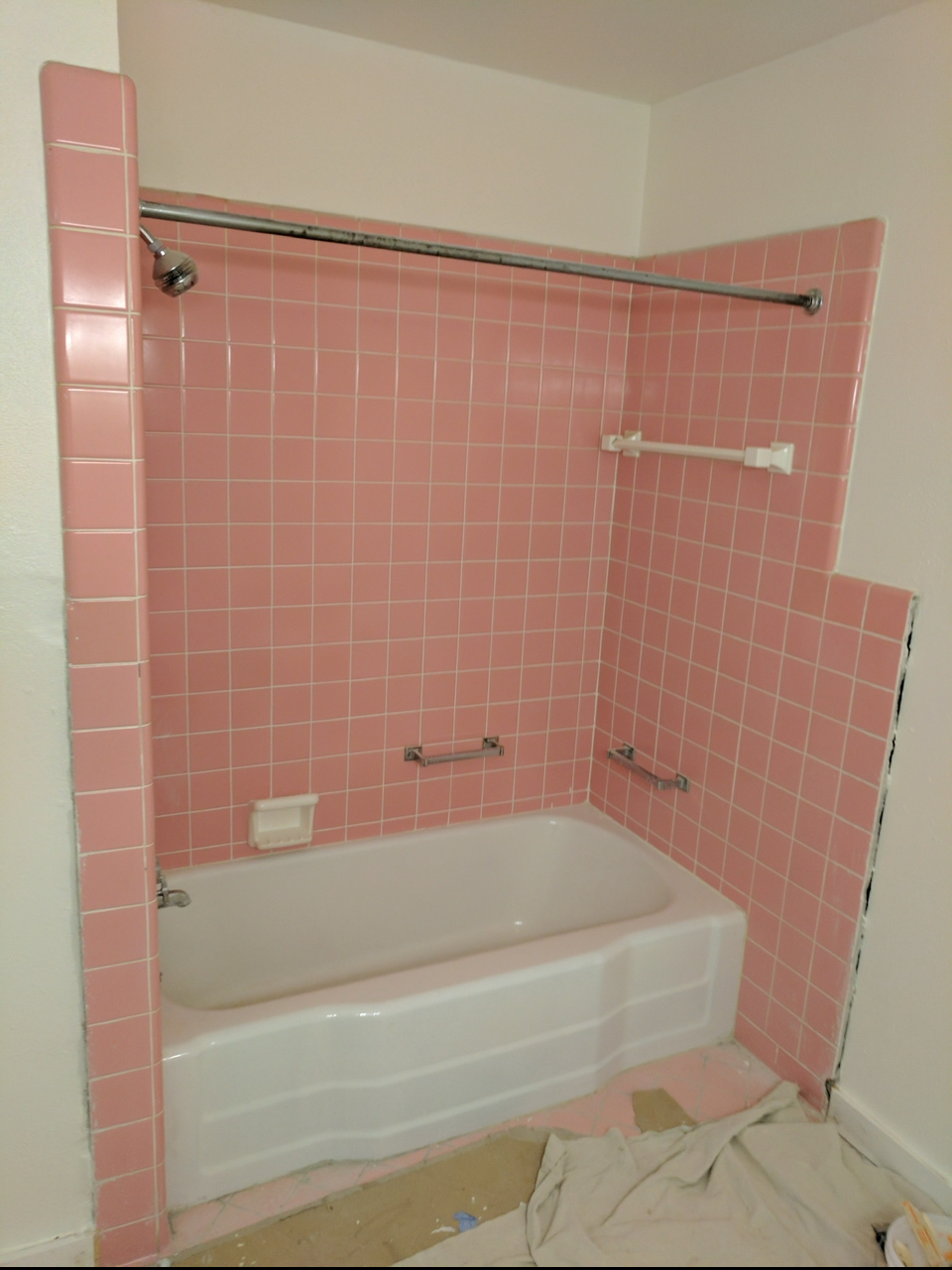
Before: dated bathroom tile is reviewed for loose pieces, grout condition, moisture signs, and surface prep needs.
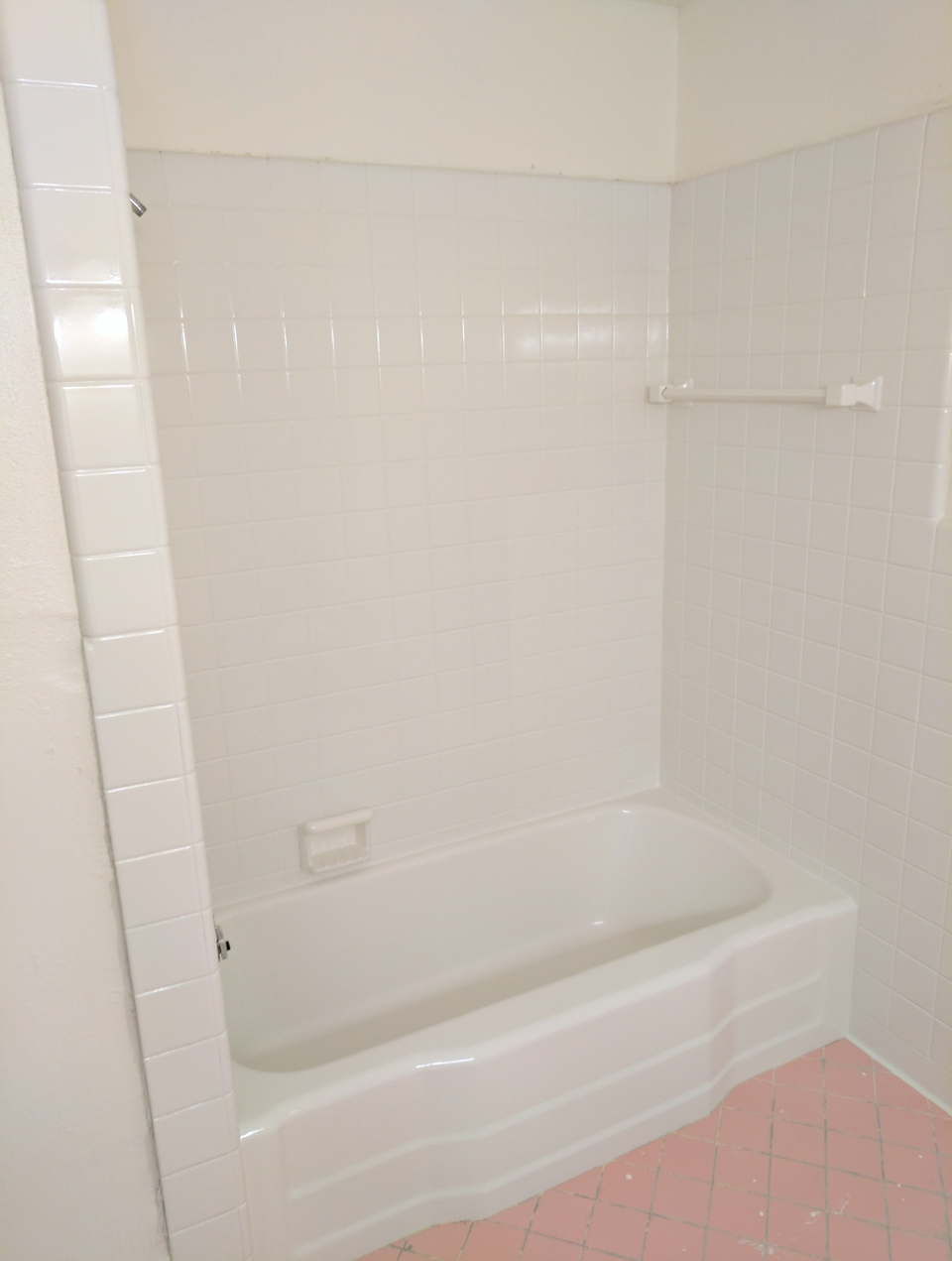
After: refinishing the tile and tub together can create a cleaner, brighter bathroom without full demolition.
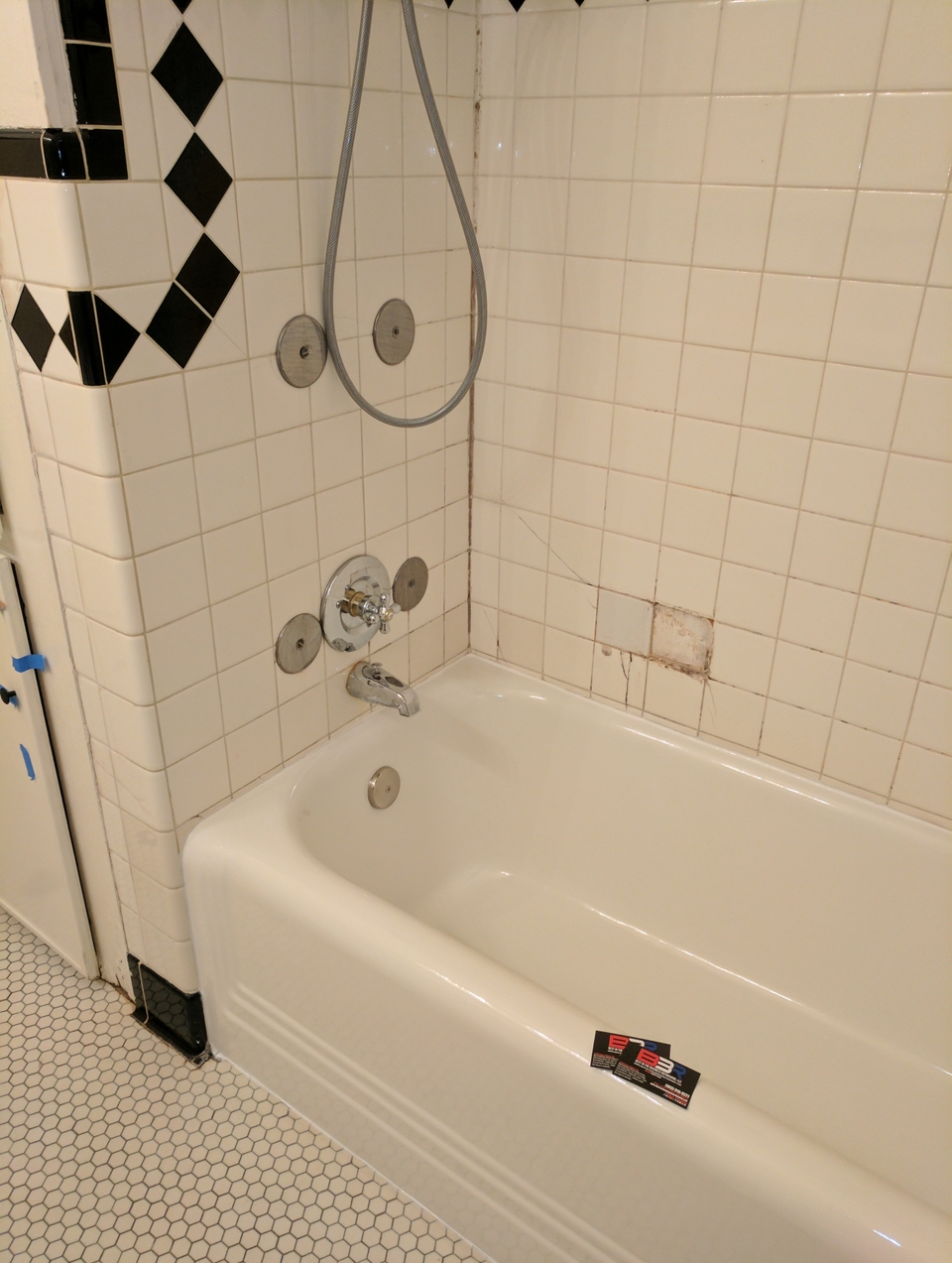
Finished surround: stable wall tile can often be refinished when the wall behind it is sound.
A few clear photos can show the surface type, damage, access, and whether the job looks like repair, refinishing, resurfacing, reglazing, or replacement advice. This helps avoid guessing before scheduling.
A wider photo shows the full tub, shower, tile wall, countertop, edges, surrounding walls, and access around the work area.
Closeups help show chips, cracks, holes, rust, peeling, staining, soft spots, worn finish, or previous coating failure.
Drain areas, corners, shelves, seams, and edges often reveal water wear, movement, old repair work, or coating failure.
Your city or nearest East Texas town helps BBR give a clear answer and recommend the right estimate path.
Yes, when the tile is stable and the wall behind it is sound. Loose tile, water damage, and wall movement should be reviewed first.
Often yes. Older pink, yellow, blue, beige, and other dated tile colors can often be refinished for a cleaner look.
Refinishing can improve the appearance of the exposed tile and grout lines, but loose tile, missing grout, or water-damaged walls may need repair first.
Yes, many customers refinish the tub and surrounding wall tile together so the bathroom looks more consistent.
Replacement may be better when the tile is loose, the wall is soft, there is active leaking, or the tile failure is caused by deeper wall damage.
Homeowners may search for tile refinishing near me, reglazing bathroom tile near me, ceramic tile refinishing, tub surround refinishing, or shower tile resurfacing when the wall tile is outdated, stained, or hard to keep clean.
BBR checks whether the tile is stable, the wall behind it is sound, and the edges, grout lines, soap dishes, corners, and seams are suitable for refinishing before recommending a coating option.
Professional tile refinishing depends on the tile being solid, clean, stable, and properly prepared. Best In The Business Refinishing LLC reviews grout, corners, caulk, soap film, loose tile, and moisture concerns before recommending refinishing.
Use these pages to compare the service that fits your tub, shower, tile, countertop, or repair issue.
Chips, cracks, holes, drain-area damage, fiberglass damage, and repair before refinishing.
Cracked fiberglass tubs, weak bottoms, shower pans, and one-piece enclosures.
Common terms for restoring an existing bathtub surface without replacement.
Older cast iron tubs with worn enamel, staining, chips, rust, or old coatings.
Porcelain and enamel tubs with dull finish, stains, chips, or drain-area wear.
Fiberglass showers, tub/shower units, wall panels, surrounds, and shower surfaces.
Bathroom wall tile, tub surrounds, shower tile, outdated colors, and hard-to-clean surfaces.
Bathroom vanities, laminate, cultured marble, and countertop surfaces.
Best In The Business Refinishing LLC works by appointment across East Texas, including Tyler, Longview, Frankston, Mount Pleasant, Paris, Canton, Gilmer, Nacogdoches, Lufkin, Crockett, Texarkana, and surrounding rural communities. Text your nearest town and photos so the right estimate path can be recommended.